
University of Illinois launches campuswide Entrepreneurship Minor
Jul 22, 2026
For the first time ever, students from across the University of Illinois can now pursue an entrepreneurship minor. Beyond core courses from both Gies Business and Grainger Engineering, the minor allows students to choose from more than 70 elective courses from within their respective colleges to round out the minor.
Accountancy Alumni Business Administration Entrepreneurship Faculty Finance Student
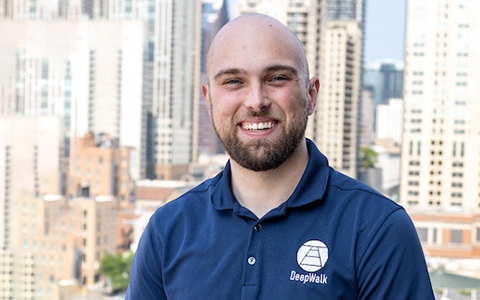
iVenture alumni DeepWalk listed among Forbes’ Accessibility 200 list
Jun 25, 2026
Forbes Accessibility 200 highlights products, software, and services that allow people with disabilities to have equitable access to information, content, public spaces, employment, and life experiences.
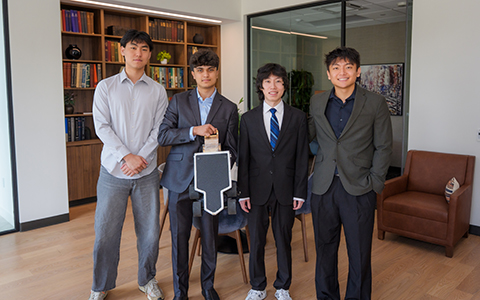
iVenture Cohort 12 building the future with artificial intelligence
Jun 24, 2026
iVenture Accelerator is an immersive program for student founders that accelerates growth with a full-time summer sprint and 11 months of continuous education throughout the academic year.
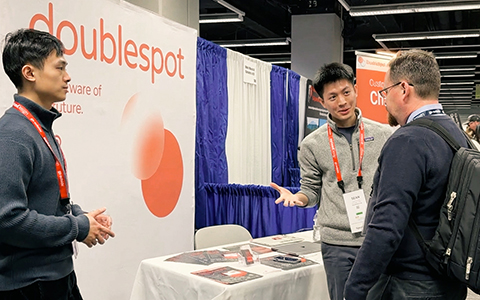
iVenture alumnus DoubleSpot modernizes recreation management for campuses and communities
Jun 10, 2026
Inspired by his internship with the Los Angeles Dodgers and supported through the iVenture Accelerator, Sean Chang built software that streamlines scheduling, registrations, events, rentals, and facility operations into one platform.
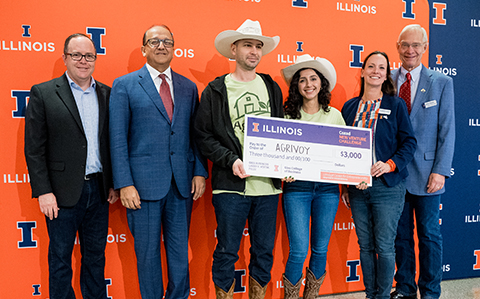
Agritourism hub Agrivoy claims Voitik Prize at Cozad New Venture Competition
May 28, 2026
Jeff and Forough Haskel, two University of Illinois iMBA students from Texas, turned a frustrating search for a Wyoming ranch vacation into a startup idea called Agrivoy — an “Airbnb for agritourism.” After developing the idea through the Cozad New Venture Competition, Agrivoy won the $3,000 Voitik Prize for online MBA-led teams.

Healthcare Innovation: How one iMBA student is improving the birthing experience
May 27, 2026
Galina Mihalkina, a Gies iMBA student, helped develop PeriAssist, a medical device aimed at reducing trauma during difficult childbirths by filling a gap between existing tools. As the project’s business lead, she handled strategy, stakeholder mapping, and commercialization, helping the team win awards and move toward funding and patents.

Gies Business senior is tackling cybersecurity efficiency through research and entrepreneurship
Apr 30, 2026
Gies Business senior Atharv Vasisht is developing Legion SDI, a prototype platform designed to integrate and optimize enterprise cybersecurity tools, potentially reducing threat detection and response times by over 80%.
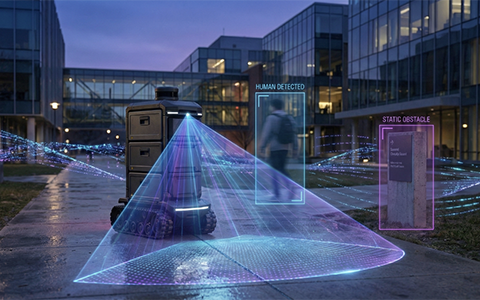
NexLoop could bring delivery robots to campus sidewalks
Apr 29, 2026
A University of Illinois student co-founded NexLoop, a startup building autonomous delivery robots designed for campuses. Their multi-compartment robots can carry different types of items at once and use AI for efficient routing.
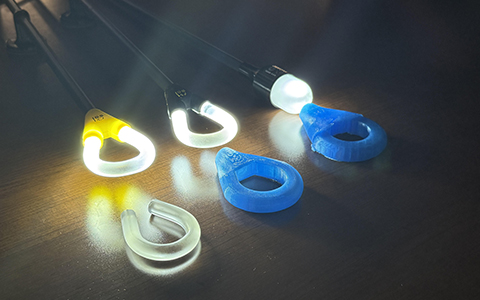
Sol brings added safety and empowerment to wheelchair operators
Apr 24, 2026
Carter Schott developed Sol, a USB-powered lighting system for wheelchairs that improves visibility and allows users to signal for attention. Supported by the University of Illinois’ entrepreneurial ecosystem, he is refining the product through user feedback and pilot testing while working toward bringing it to market and expanding adaptive technology solutions.

MailWand hopes to revolutionize digital conversation management, starting with rebuilding email for the AI era
Apr 22, 2026
MailWand is an AI-powered email client founded by Gies Business student Runzhao Hu that transforms cluttered inboxes into structured, actionable workflows. Instead of treating emails as messages, it organizes them into prioritized tasks, categorized workflows, and key insights using AI.

Study helps universities strategize courses on ever-changing topics
Apr 10, 2026
Some areas of knowledge change little over time – but others, like AI and entrepreneurship, evolve so quickly that faculty must redesign them every semester.

iVenture team, Credence Cleantech, moving forward with energy pilot in India
Mar 30, 2026
Less than a year after participating in the iVenture Accelerator, Credence Cleantech is embarking on a pilot energy project in India. The ambitious initiative could potentially launch a cost-effective net-zero alternative for plants and bring in $1.5 million for the startup.

Gies Business pioneers future of healthcare with new iMBA specialization
Mar 18, 2026
Developed in partnership with the Carle Illinois College of Medicine, Mayo Clinic, and the University of Illinois’ Siebel Center for Design, this collaborative effort is designed to equip the next generation of leaders with the skills to transform healthcare delivery.
Orange & Blue Ventures to collaborate with Illinois Ventures
Mar 17, 2026
Gies College of Business is teaming up with one of the largest and longest-running university-based venture capital firms in the country – Illinois Ventures – to offer students a new hands-on learning experience.
Accountancy Alumni Business Administration Entrepreneurship Faculty Finance Student
Leading Midwest research universities launch innovation hub in San Francisco
Mar 10, 2026
The University of Illinois Urbana-Champaign has joined seven other leading Midwestern research universities in launching Third Coast Foundry, a collaborative San Francisco-based innovation hub.
Accountancy Alumni Business Administration Entrepreneurship Finance Student
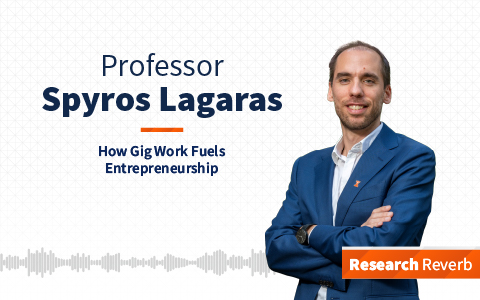
PODCAST: How Gig Work Fuels Entrepreneurship
Feb 24, 2026
In this episode of Research Reverb, Professor Spyros Lagaras digs into his research exploring how common it is for gig economy workers to use that experience as a pathway to entrepreneurship.
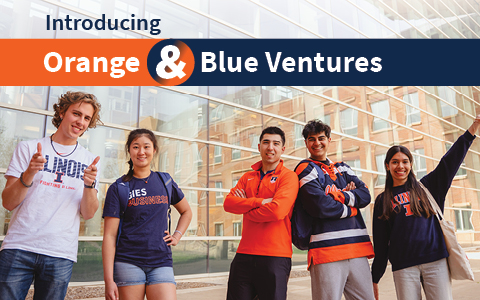
Gies Business launches U of I’s first student-led venture capital fund
Feb 05, 2026
Thanks to a generous gift from Illinois alumni Douglas and Deborah Ackerman, Gies College of Business is pleased to announce the launch of a new student-led venture capital investing program – Orange & Blue Ventures.
Accountancy Alumni Business Administration Entrepreneurship Faculty Finance Student

Using AI as co-founders, Gies students build real-world apps
Jan 28, 2026
Students in Vishal Sachdev's “AI Solopreneurship & Product Building” course ideate, code and publicly launch a web or mobile product in just 15 short weeks – using only AI tools.
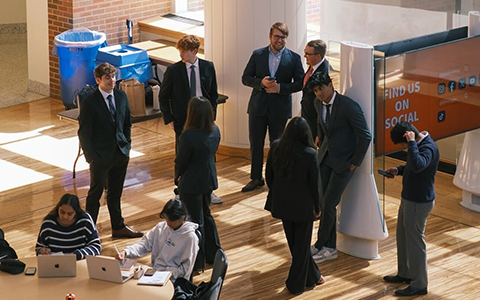
EntreCorps proves mutually beneficial for startups and consultants
Jan 14, 2026
Housed in the Origin Ventures Office of Entrepreneurship in Gies College of Business, EntreCorps provides valuable consulting work at no charge for startups within the University of Illinois ecosystem.
Accountancy Business Administration Entrepreneurship Finance Student
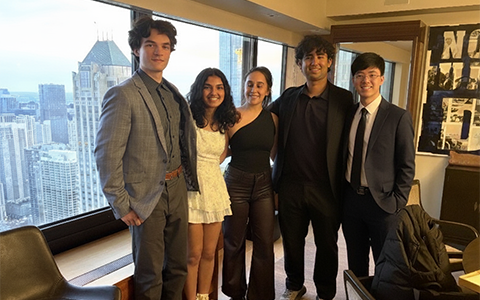
Illinois students launch InvoGenix, an AI startup tackling $600M healthcare paperwork crisis
Jan 08, 2026
Poets&Quants agrees with InvoGenix’s potential, recently naming it one of the nation’s Most Disruptive Business School Startups of 2025.